.jpg)
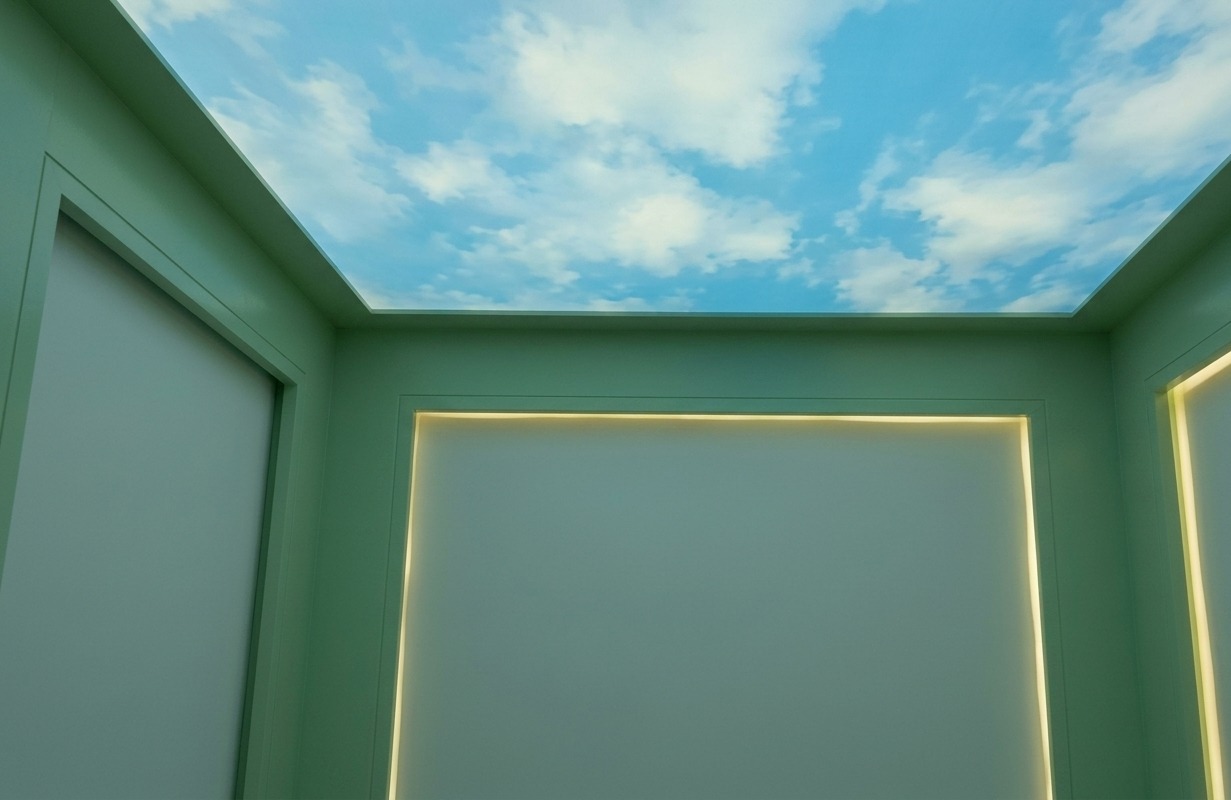
Follow ICEIL’s professional stretch ceiling installation policy for a safe and seamless execution process.
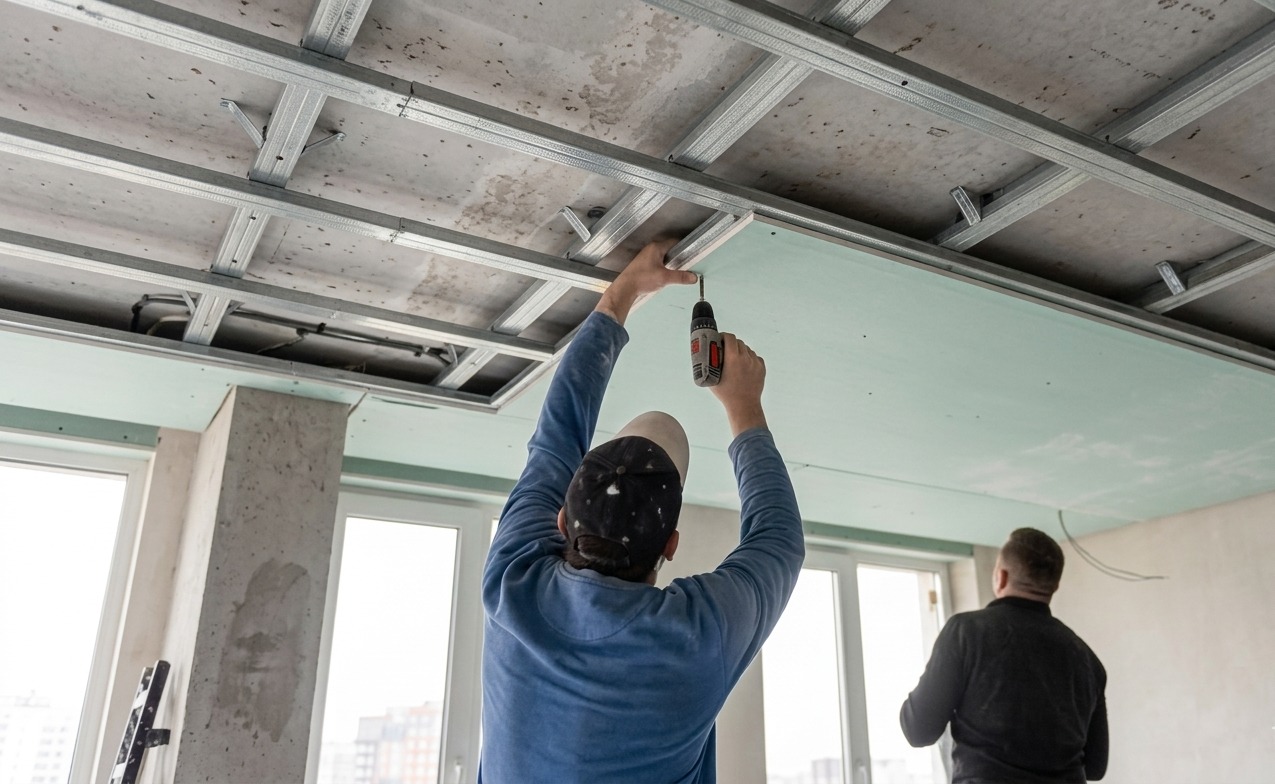
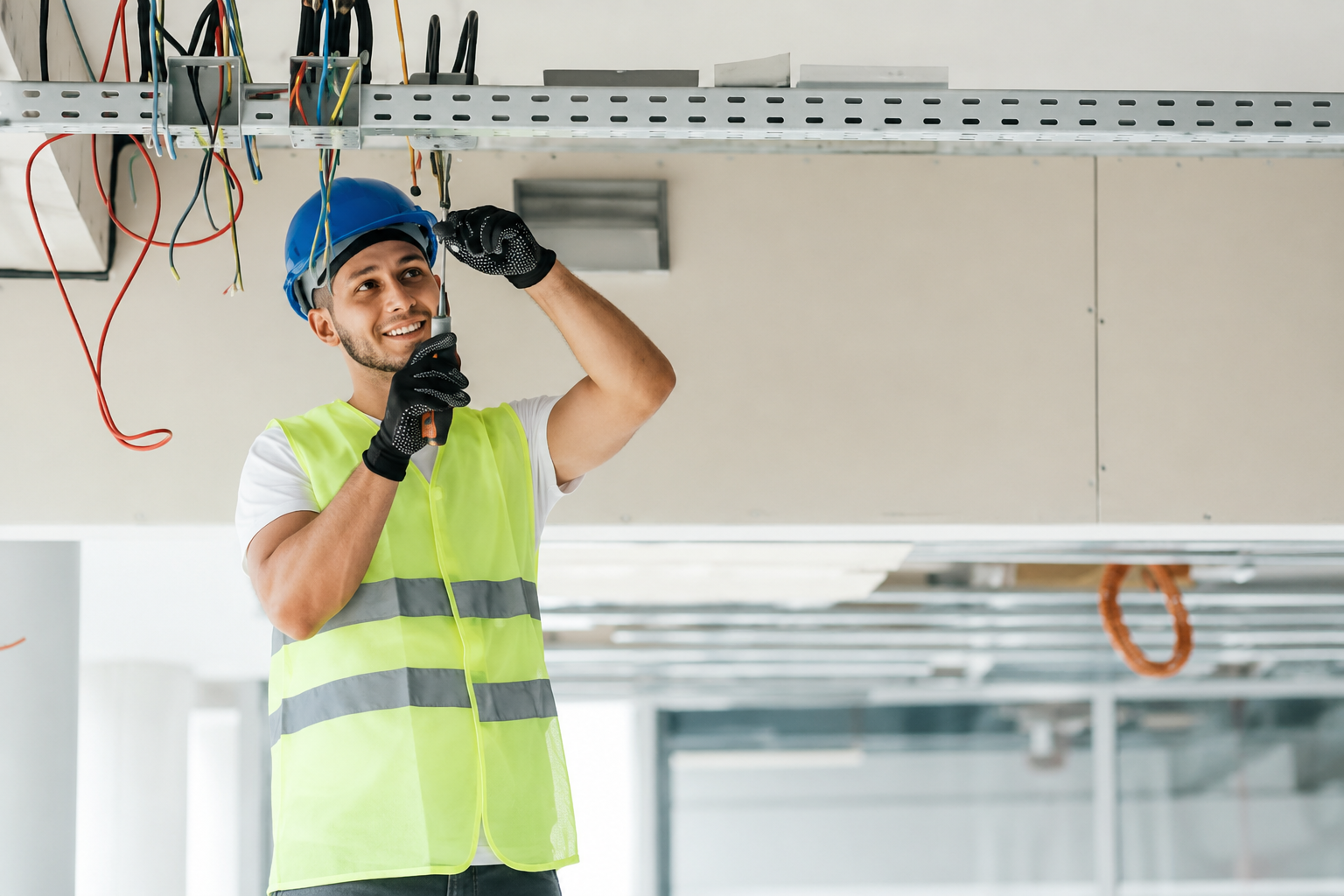
All civil, painting, and electrical rough-in works must be completed before installation. The ceiling area must be clean, dry, and dust-free. Ambient temperature must be maintained between 15°C and 40°C. Scaffolding must be provided by the client and should comply with all safety standards.
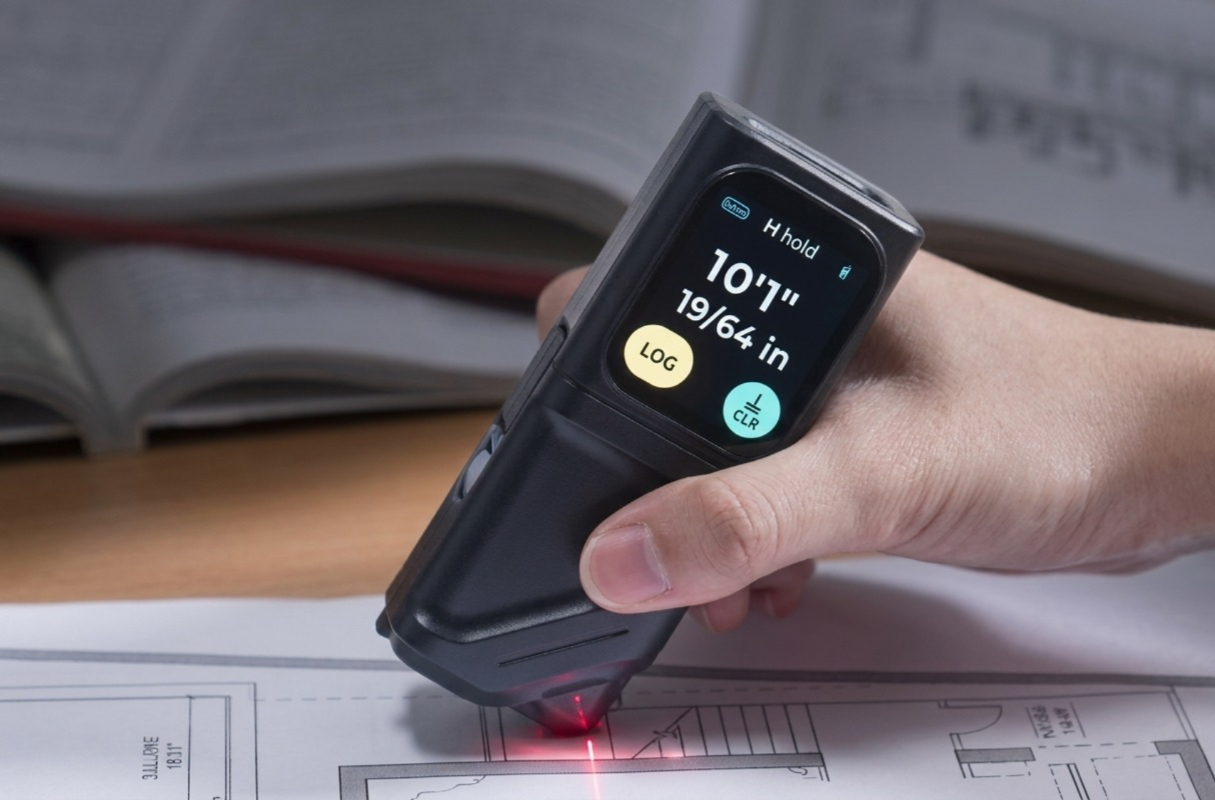
Site measurements must be jointly verified by the client, project manager, and installation team. Production will begin only after final drawing, design, and size approval. For any complex shapes, a templating process is required, and sufficient time should be included in the project timeline.
Stretch ceiling membranes must be protected from sharp objects, dust, and heat sources. Folding or improper handling is strictly prohibited. Only approved profiles, accessories, and fixing systems shall be used. All materials delivered to the site must be stored safely. Any damage to materials will not be the responsibility of ICEIL.
All positions of lights, AC diffusers, speakers, sprinklers, and fixtures must be finalized before installation. No changes will be allowed after membrane stretching. Coordination with electrical and HVAC contractors is mandatory.
Installation shall be carried out only by trained and authorized technicians using approved tools and heating equipment. Manufacturer installation guidelines must be strictly followed.
The installation will be inspected for wrinkles, sagging, alignment, and edge finishing. Client inspection and sign-off are mandatory.
Warranty covers manufacturing defects only. Physical damage, water leakage, electrical faults, and misuse are excluded. Unauthorized modifications will void the warranty.
Follow the requisites and pre-requisites before commencing stretch ceiling installation.

Use of PPE such as helmets, gloves, and safety shoes is mandatory. Scaffolding and work-at-height safety norms must be strictly followed. Fire safety regulations must be complied with at all times.
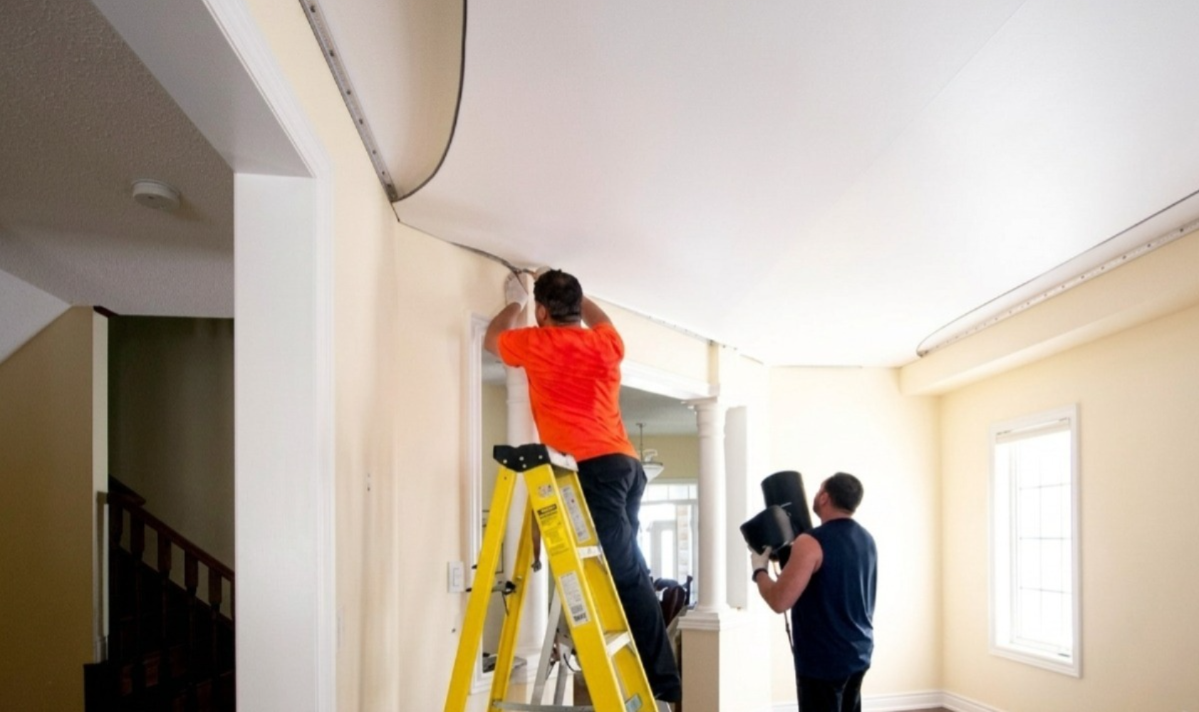
Prior written permission from the client or site management is mandatory for use of hot air blower with gas cylinder. All fire safety norms must be followed and fire extinguishers must be available at site.
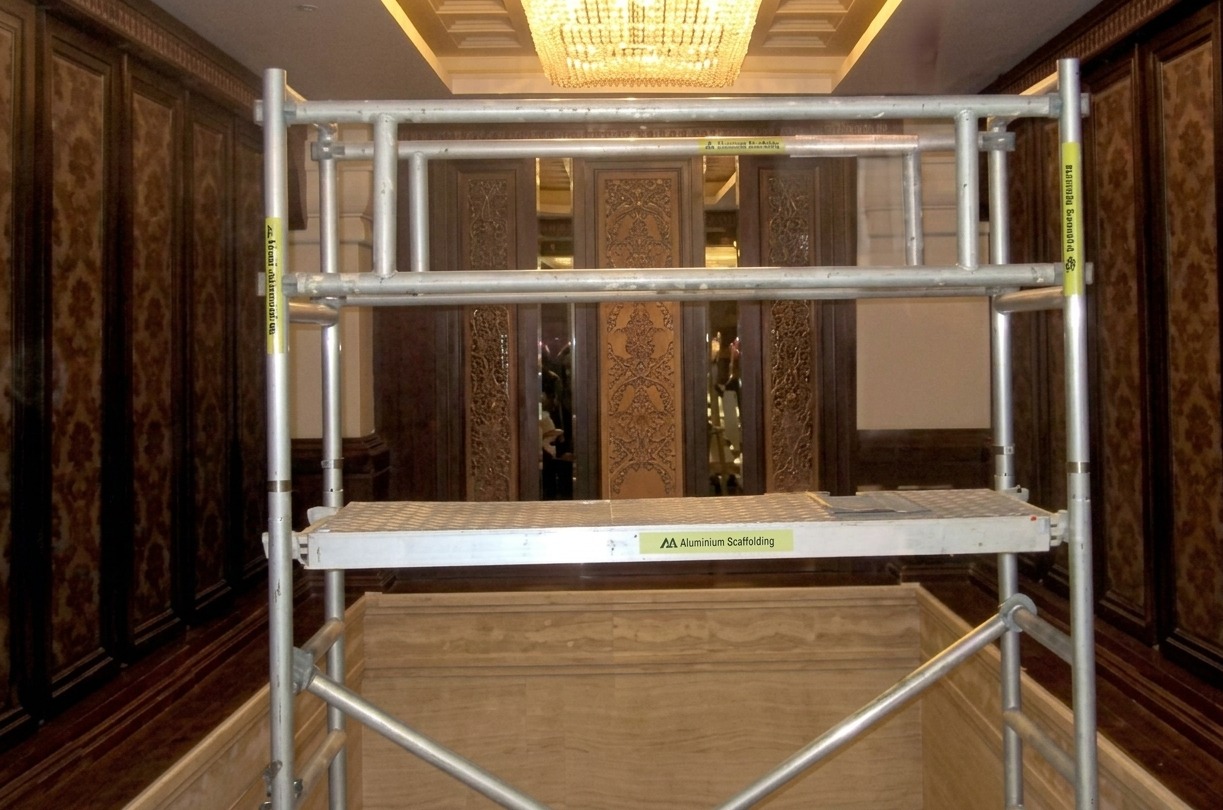
Scaffolding arrangement is under client or site scope unless otherwise agreed in writing. Installation will not commence if scaffolding safety standards are not met.
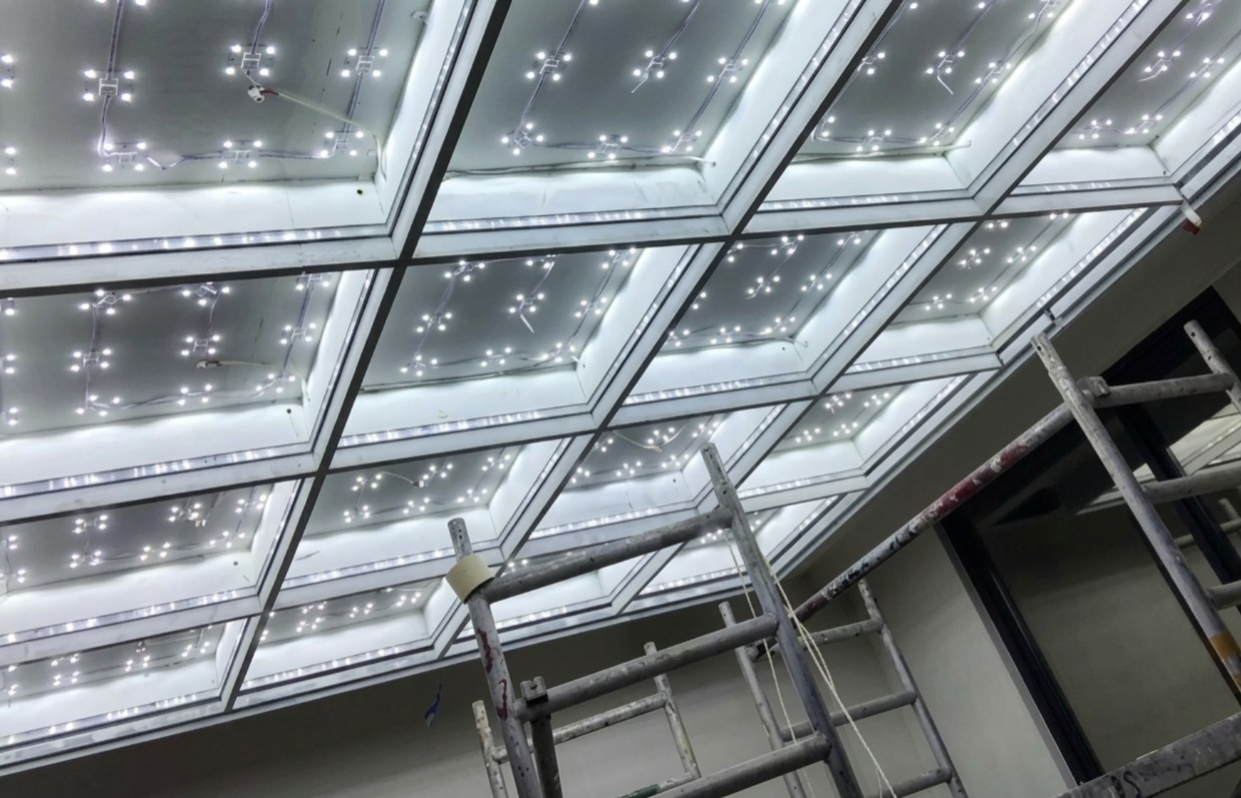
Above 4 meters height : certified cup lock scaffolding is mandatory.
Below 4 meters height : aluminium scaffolding or mobile tower is recommended.
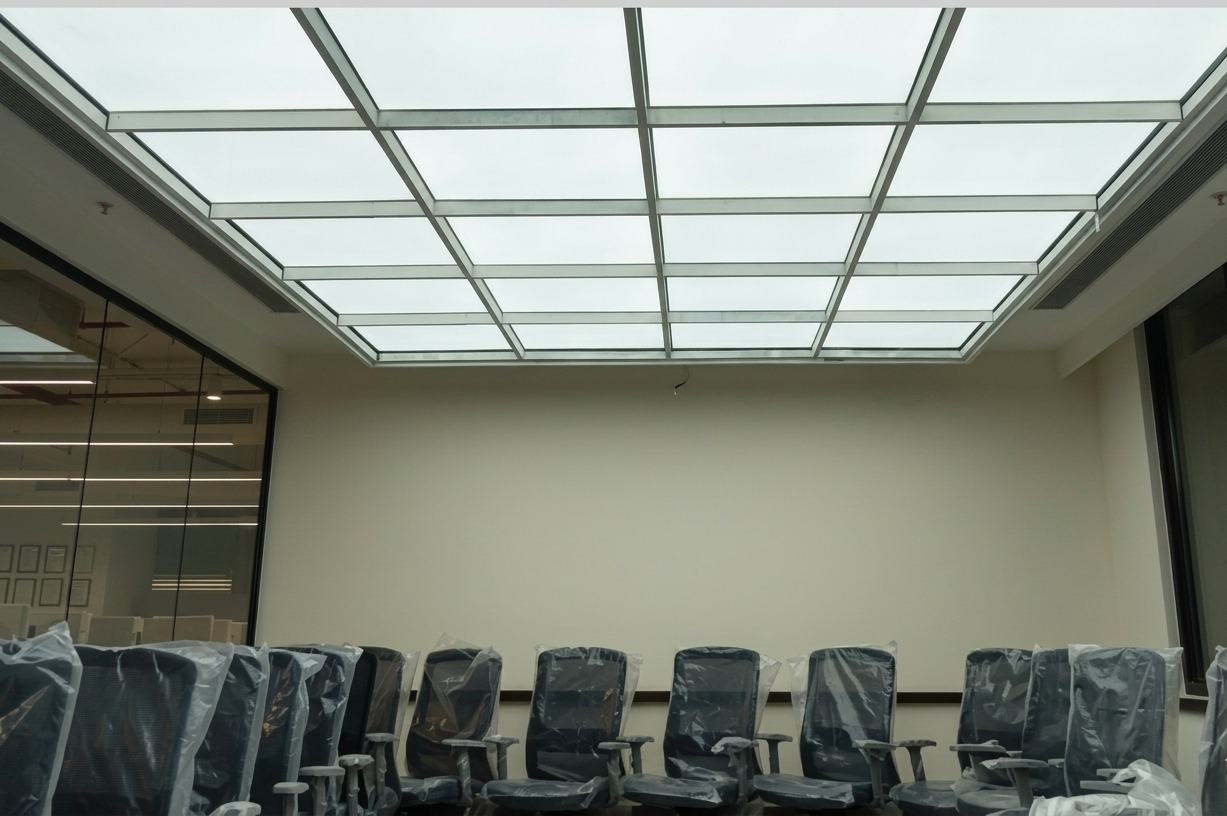
0–400 sq.ft : Approximately 3–7 working days.
400–1000 sq.ft : Approximately 5–15 working days.
Timeline may vary based on site conditions and design complexity.

Before the installation team reaches the site, latest site photos and videos are mandatory. Installation schedule will be confirmed only after verification.
Follow the below technical requirements for proper ICEIL / LED system installation.
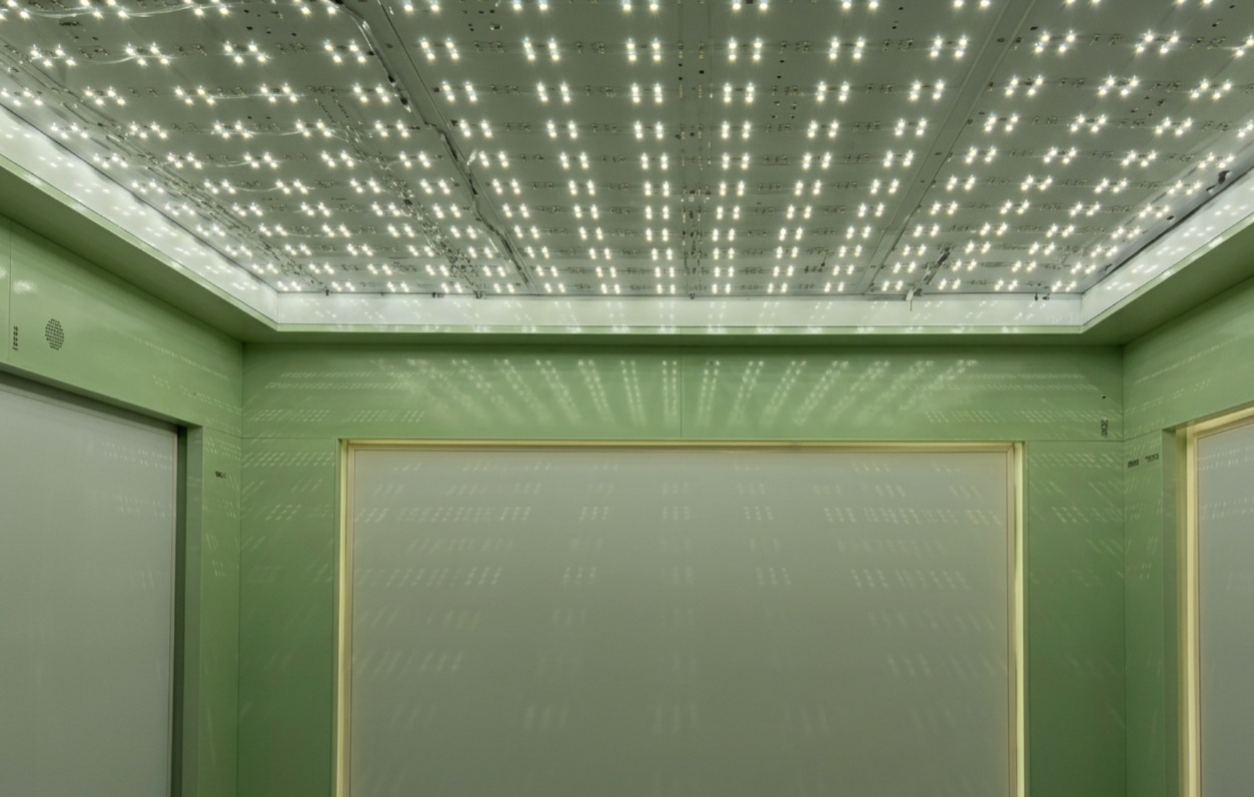
ICEIL LED Block Stretch Ceiling systems operate on a 24V DC constant voltage driver system, ensuring uniform illumination, safety, and energy efficiency.
Provide 1–2 access trap doors per installation, located within 2 meters of each fixture for maintenance, ventilation, and servicing. Access provision is mandatory.
Power supply must be routed directly from the Distribution Board (DB).
Each system must have an independent dedicated circuit.
Looping from other electrical circuits is strictly prohibited.
Provision for dedicated switch control can be included if required.
Drivers convert AC input to 24V DC output.
Drivers must be installed near the trap door location.
Easily accessible for maintenance.
Properly ventilated to prevent overheating.
DC wiring must be executed as per approved drawings.
If distance between driver and fixture exceeds 2 meters, the electrical contractor must provide suitable cabling.
Cable sizing must ensure no voltage drop and maintain uniform illumination.
Up to 800 W → 1 x 1.5 sq.mm.
Up to 1200 W → 1 x 2.5 sq.mm.
Above 1200 W → 2 x 2.5 sq.mm or higher.
Final cable sizing must consider load, distance,
and voltage drop.
AC power supply up to trap door.
DC wiring (if beyond 2 meters).
Proper circuit protection.
LED block system supply.
Driver specification.
Installation guidance.
All installations must comply with local electrical standards and safety regulations.
Ensure: proper earthing.
Balanced load distribution.
Safe cable routing.